


No. Hydrangeas are not edible, and they don’t belong on a cake you plan to eat.
They’re one of the most requested wedding cake flowers and one of the worst choices. NC State Extension lists the flowers, leaves, stems, and bark as toxic. They contain compounds called cyanogenic glycosides, which can cause nausea, stomach pain, vomiting, and sweating.
The honest version: the risk is rated low, and it takes eating a lot to get sick. Nobody is likely to end up in the ER over a petal. But “probably won’t hurt your guests” is a strange standard for dessert. Pick something else.
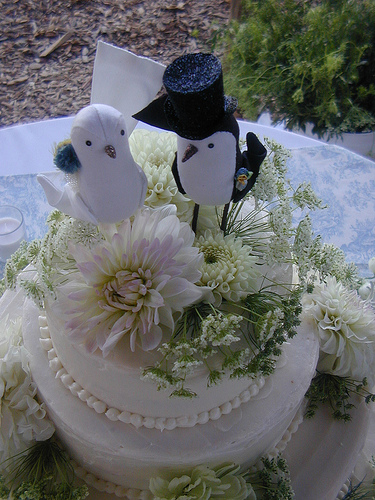
Can You Put Hydrangeas on a Wedding Cake?
Skip them. We asked Jodi Rhoden of Short Street Cakes in Asheville, and she didn’t hedge.
Hydrangeas are toxic to humans.
Jodi told us she gets requests for hydrangeas on wedding cakes all the time. Her rule is simple: choose flowers that are non-toxic, edible, or both. And know that those aren’t the same thing. Every edible flower is non-toxic. Not every non-toxic flower is something you’d want to eat.
If you love the look, you have options. Put hydrangeas around the base of the cake stand instead of on the cake. Ask your baker for sugar or wafer-paper hydrangeas. Or use them everywhere else, in the bouquet, the arch, and the centerpieces, and let the cake wear something safe.
Are Hydrangea Petals, Leaves, or Flowers Safe to Eat?
None of them. Petals, flowers, leaves, stems, and bark are all on the toxic list. There’s no safe part to pull off and scatter on the frosting.
Flowers That Are Safe to Eat on a Wedding Cake
These show up on the edible flower lists from Colorado State University Extension and University of Minnesota Extension:
- Roses. Petals only. The classic for a reason.
- Pansies, violas, and Johnny-jump-ups. Flat, colorful, and made for pressing into buttercream.
- Violets. Tiny, sweet, perfect for a woodland cake.
- Lavender. A little goes a long way.
- Nasturtiums. Bright and peppery.
- Calendula. Golden petals that hold their color.
- Lilac. A spring wedding favorite.
- Dianthus (pinks). Ruffled edges, clove scent.
- Bachelor’s buttons. That true blue is hard to find anywhere else.
- Chamomile. Small daisy-like blooms for a meadow look.
- Borage. Star-shaped and blue.
- Apple blossoms. For orchard and early-summer mountain weddings.
- Hibiscus and daylilies. Big blooms when you want drama.
One catch: “edible” describes the plant, not how it was grown. A rose that’s been sprayed is not a rose you should eat. More on that below.
Wedding Flowers to Keep Off the Cake
Popular in bouquets. Not for dessert. Colorado State’s list of toxic flowers includes:
- Lily of the valley
- Foxglove
- Larkspur
- Daffodils and jonquils
- Hyacinth
- Sweet pea
- Calla lily
- Azalea and rhododendron
- Clematis
- Bleeding heart
- Poppies
- Amaryllis
- Oleander
- Monkshood
Add hydrangeas to that list and you’ve covered a lot of what’s sitting in the average florist cooler.
Where Your Flowers Come From Matters More Than You Think
Here’s the part most couples miss. Even a safe flower can be the wrong flower.
Colorado State’s guidance is blunt: don’t eat flowers from florists, garden centers, or nurseries, because they aren’t grown to be eaten. Jodi said the same thing about supermarket bunches. They’ve often been treated with pesticides, and that’s not something you want pressed into frosting.
So ask. Look for flowers sold as “edible” or grown organically. Your best bet is in-season and local. Jodi’s pick was the farmers market, where you can ask the grower exactly how the flowers were raised.
How to Decorate a Cake With Flowers You Can’t Eat
Want blooms that are non-toxic but not meant for eating? You can still use them. You need a barrier between the stem and the cake.
- Rinse and dry the flowers to clear off dirt and insects.
- Keep stems out of the cake. Slide each stem into a food-safe flower pick or a plastic straw before it goes in.
- Or don’t pierce the cake at all. Rest blooms on a small disc of parchment or fondant on top of the frosting.
- Add them last. Flowers wilt. Place them as close to cake cutting as you can.
- Pull them before serving. Decoration comes off before the slices go out.
Some bakers wrap stems in floral tape, which is the method Sugar and Sparrow walks through. Others prefer picks because tape adhesive isn’t made for food. Ask your baker which they use.
And to be clear, a barrier is for flowers that are safe but untreated. It is not a workaround for toxic ones. Those stay off the cake.
Three Questions to Ask Before the Cake Is Decorated
- Ask your florist: Were these flowers sprayed, and are any of them toxic?
- Ask your baker: How do you keep stems from touching the cake?
- Ask both: Who is placing the flowers, and when?
The florist and the baker often assume the other one checked. Make sure somebody did.
Hydrangeas and Wedding Cake FAQ
Are hydrangeas edible to humans?
No. Hydrangeas are toxic to humans. The risk is low and usually takes a large amount, but they are not food.
Are hydrangeas poisonous?
Mildly. NC State Extension rates the severity as low. Symptoms can include nausea, stomach pain, vomiting, and sweating.
Can you eat hydrangea flowers or petals?
No. The flowers are one of the toxic parts of the plant.
Are hydrangea leaves edible?
No. The leaves are toxic too.
Are hydrangeas food safe as a cake decoration?
No. Use sugar hydrangeas, or keep the real ones on the table and off the cake.
What flowers are safe to put on a wedding cake?
Roses, pansies, violets, lavender, nasturtiums, calendula, and lilac are all on university edible flower lists. Make sure they were grown without pesticides.
This guide is for wedding planning, not medical advice. If someone eats a plant and feels sick, call Poison Control at 1-800-222-1222.